
MD: Personalised attention ensures the learning experience resonates with a student’s own pace and style. Learn how to implement it properly.
Introduction: Why Every Student Learns Differently
Every student has their own pace of learning. Some students are faster than others, making it difficult for other learners to understand the concept properly, creating a need for personalised learning.
By understanding each student’s learning needs, teachers can provide the right support, encouragement, and learning opportunities. Personalised learning helps students build confidence, overcome challenges, and reach their full potential both academically and personally.
In this blog, we will talk about the importance of personalised learning, its benefits, challenges, and role.
What is Personalised Attention in Education?
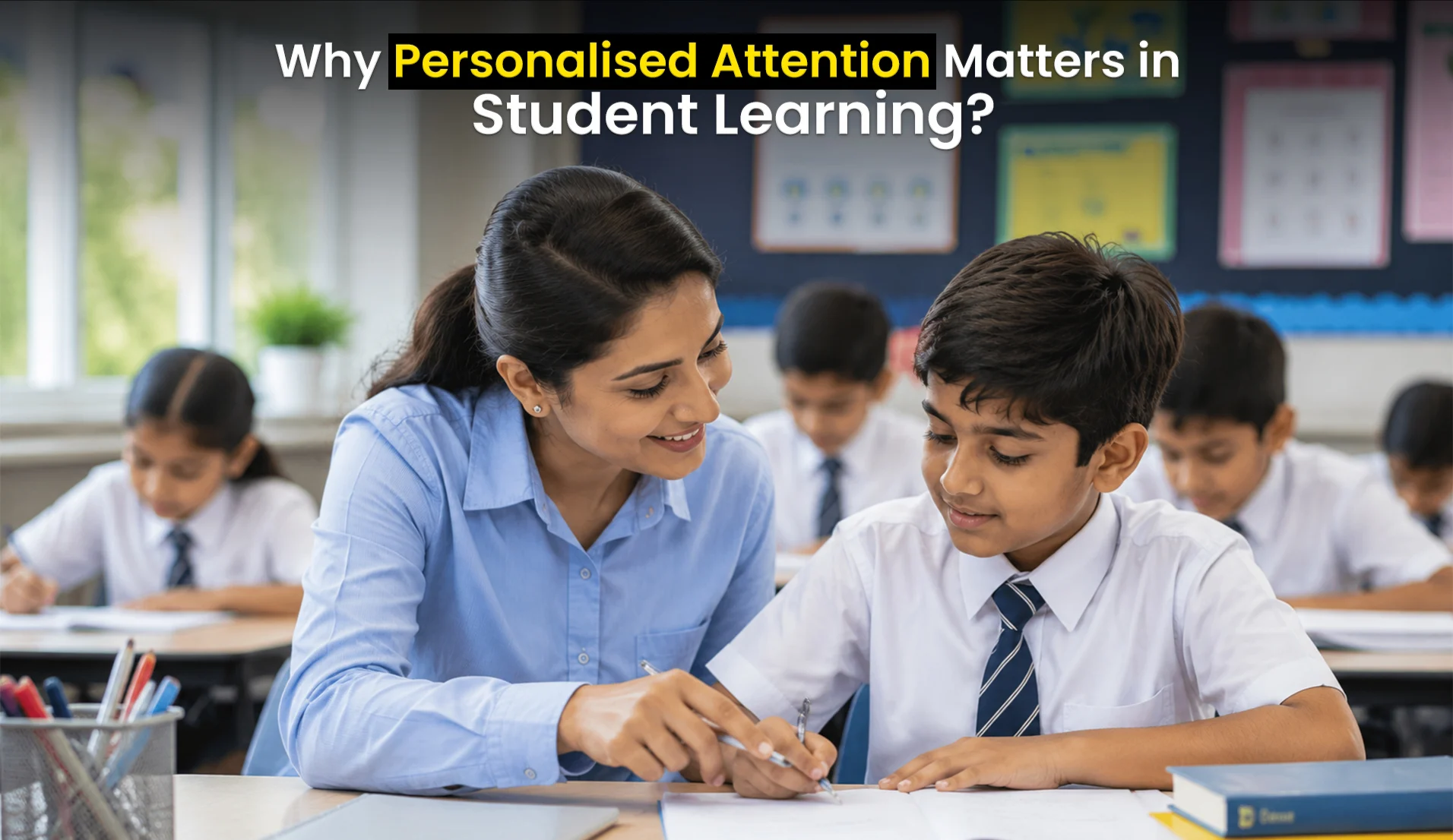
Personalised attention in education means providing personalised guidance to each student at their own pace and helping them learn in the easiest way possible. Every student learns differently, using visual examples, hands-on activities, discussions, or practical experiences.
In today’s educational environment, personalised attention plays a crucial role in creating meaningful learning experiences. It helps students overcome learning barriers, build confidence in their abilities, and achieve their full potential both inside and outside the classroom.
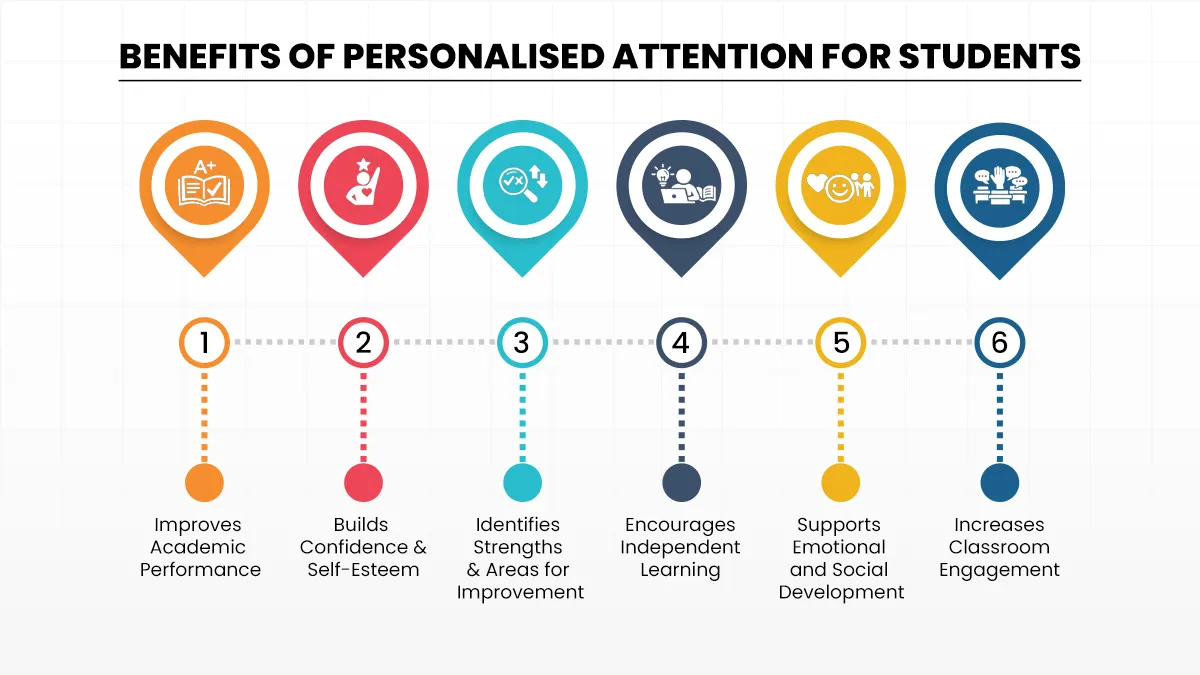
Here are some benefits of personalised attention for students:
1. Improves Academic Performance
As the teaching method turns to personalised learning, it helps students understand concepts more efficiently, enhancing their concentration and academic performance.
2. Builds Confidence and Self-Esteem
When students receive personalised learning, they feel encouraged, valued, and supported. This boosts their confidence, motivates them to participate in classroom activities, and helps them develop a positive attitude toward learning.
3. Identifies Strengths and Areas for Improvement
>
Teachers, while providing personalised attention, recognise each student’s unique talents and areas needing additional support, helping students build on their strengths while constructively working on their weaknesses.
4. Encourages Independent Learning
When students receive the right guidance, they take ownership of their learning, while developing self-discipline, problem-solving abilities, and the confidence to explore new concepts independently.
5. Supports Emotional and Social Development
Personalised learning also creates a strong bond between the teacher and student, as they start spending more time together, making students feel comfortable expressing their thoughts, asking questions, and seeking help when needed.
6. Increases Classroom Engagement
When lessons are tailored to students’ needs and interests, they become more engaged and active in classroom discussions and activities, resulting in increased concentration, participation, and overall learning experiences.
Challenges Students Face Without Personalised Attention
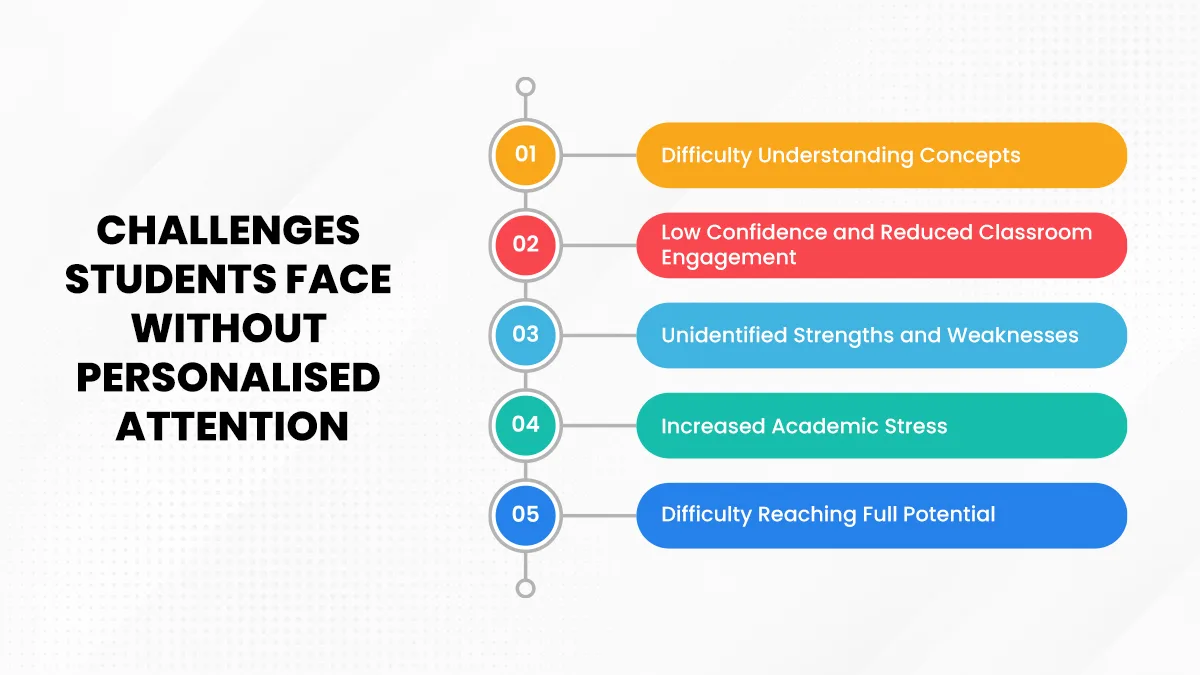
Here are some challenges that students usually face when they are not introduced to Personalised learning:
1. Difficulty Understanding Concepts
Every student learns at a different pace. Without personalised attention, some students may struggle to understand lessons because the teaching pace may be too fast or not suited to their learning style.
2. Low Confidence and Reduced Classroom Engagement
When students don’t receive the support they need, they become less talkative and lose interest in lessons, leading to a loss of confidence and reduction in classroom engagement.
3. Unidentified Strengths and Weaknesses
>
Personalised attention helps students realise their strengths and weaknesses; otherwise, they don’t and hence are not able to work on improving where they lack or sharpen where they excel.
4. Increased Academic Stress
Students who struggle silently often experience frustration and stress. When learning challenges are not addressed early, academic pressure can increase and affect overall performance.
5. Difficulty Reaching Full Potential
Without personalised attention, students may not receive the encouragement and guidance needed to maximise their abilities, limiting their academic, social, and personal development.
Role of Teachers in Providing Personalised Attention
Teachers provide Personalised attention to students. By understanding each student’s strengths, weaknesses, interests, and learning pace, teachers can create a more effective and engaging learning experience.
One of the most important aspects of Personalised attention is providing individual guidance when students face difficulties. By addressing doubts and offering additional support, teachers help students overcome learning challenges and build confidence in their abilities.
Through personalised attention and encouragement, teachers help students build confidence, resilience, and the skills needed to reach their full potential.
How Vivekanand Assandh Supports Personalised Student Learning
At Vivekanand Assandh, we believe that every student requires a personalised learning experience that helps them understand their strengths, weaknesses, and learning styles, leading to better academic performance in the future.
Our teachers closely monitor student progress and provide Personalised guidance whenever required. By identifying individual learning needs, they can offer additional support, encourage participation, and help students overcome academic challenges with confidence.
Beyond academics, Vivekanand Assandh focuses on the overall development of every child. Through mentorship, value-based education, and continuous encouragement, we help students grow academically, socially, and emotionally, preparing them for success both inside and outside the classroom.
Conclusion: The Importance of Personalised Attention in Students
Every student has their own pace of learning; some learn faster than others, but this doesn’t mean only that student is smarter, which is why personalised learning helps students learn at their own pace and become the best version of themselves.
When students receive the right guidance and support, they are better equipped to overcome learning difficulties, develop important life skills, and reach their full potential. Personalised attention not only improves academic performance but also contributes to emotional growth, self-esteem, and overall development.
Through personalised learning and holistic development, Vivekanand Assandh help students grow into confident, capable, and future-ready individuals. Contact Vivekanand Assandh today to learn how we can support your child’s unique learning journey and help them achieve their full potential.
FAQs: Personalised Attention in Students
1. How does personalised learning benefit students?
Ans: Personalised learning helps students receive the right guidance and support, helping them overcome learning difficulties, develop important life skills, and reach their full potential.