
Introduction: Why Children Need More Than Academic Education
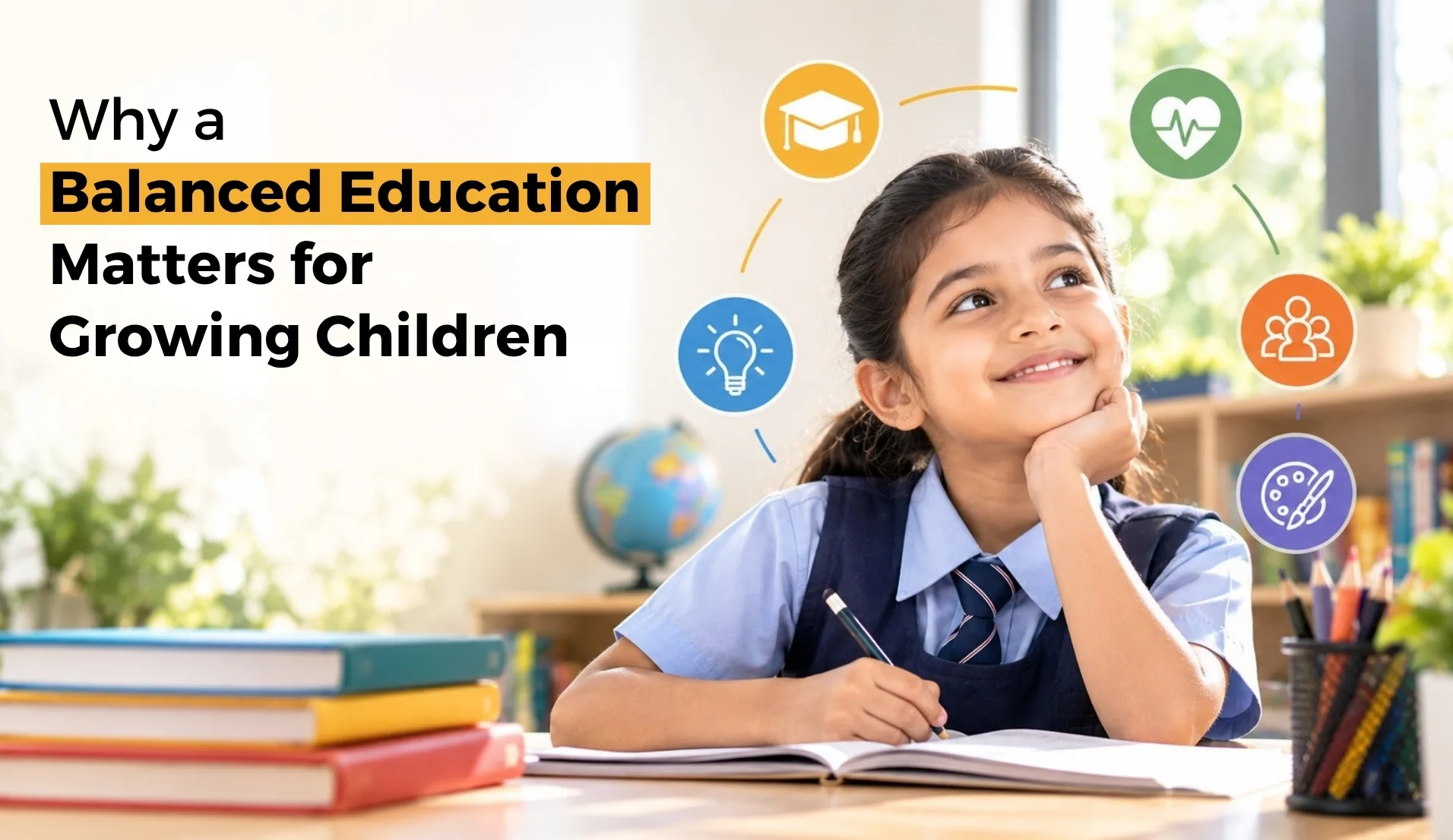
Education has become more than textbooks, marks, and examinations. It plays an important role in shaping a student’s life and preparing them for future challenges. As children grow, they need opportunities to develop social skills, emotional awareness, physical fitness, creativity, and strong values. These qualities help them understand themselves, build relationships, and handle everyday challenges with confidence.
Balanced development brings academics and holistic skills together. By supporting growth in multiple areas, schools and parents can help children become well-rounded individuals who are better prepared for future challenges. In this blog, we discuss the importance of balanced education for growing children and how it shapes children academically and socially.
What Is Balanced Education?
Balanced education is a combination of academic development and social skills to prepare students for future challenges. It combines academics, physical activities, co-curricular activities, social interaction, values, and life skills.
This development helps children build essential skills such as creativity, problem-solving, decision-making, and communication. For example, classroom lessons strengthen subject knowledge, sports encourage teamwork and discipline, and creative activities help children express their ideas.
Why Is Balanced Education Important for Growing Children?
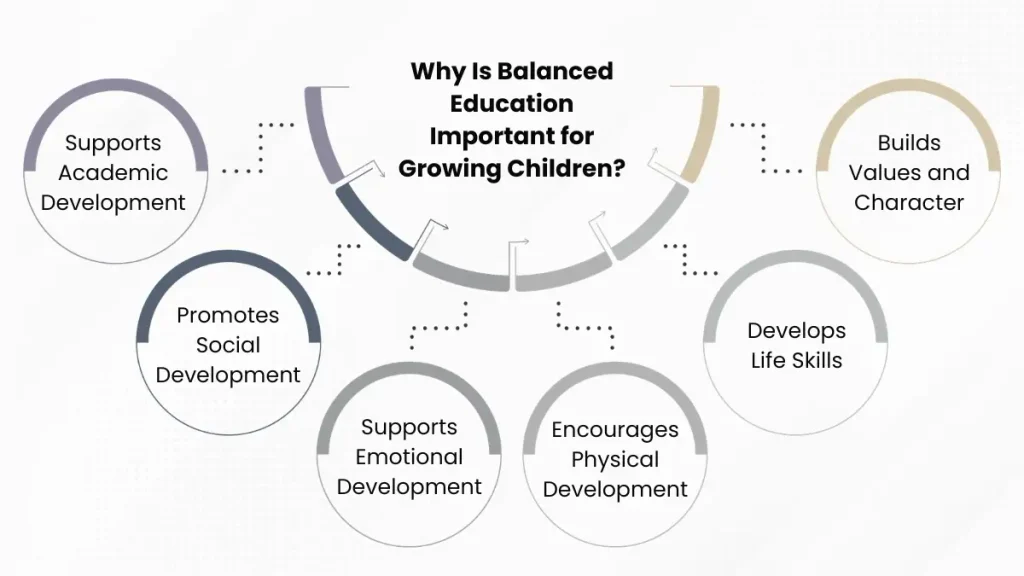
Here is why balanced education is important for growing children:
1. Supports Academic Development
Balanced education doesn’t mean neglecting textbook knowledge or grades. It means including essential skills such as creativity, problem-solving, and communication in academic sessions, helping children create a good foundation for their careers.
2. Promotes Social Development
Balanced education encourages questioning and participating in group discussions, sports, and social events. This helps students come out of their comfort zone and ask questions or communicate with mentors and fellow students when needed.
3. Supports Emotional Development
Children need guidance to understand and manage their emotions. Activities that encourage self-expression, teamwork, and reflection can help them develop emotional awareness, patience, and resilience. With appropriate support from teachers and parents, children can learn to handle challenges and respond to setbacks in healthier ways.
4. Encourages Physical Development
Physical activities such as sports, outdoor games, and exercise help children become healthy and improve stamina. They also provide opportunities to practise discipline, teamwork, and perseverance.
5. Develops Essential Life Skills
Activities such as group projects, presentations, creative skills, and classroom discussions strengthen decision-making, time management, communication, and independent thinking. These skills help children become more confident and prepared to manage different responsibilities.
6. Builds Values and Character
Through daily interactions, classroom activities, and community-based initiatives, children can learn to consider others’ perspectives and make thoughtful choices. These qualities contribute to their personal growth and help them become responsible members of society.
Key Elements of Balanced Education
| Element | What It Helps Children Develop |
| Academic Learning | Knowledge, understanding, and critical thinking |
| Sports & Physical Activities | Fitness, discipline, and perseverance |
| Co-Curricular Activities | Creativity, confidence, and communication |
| Social Interaction | Teamwork, cooperation, and empathy |
| Value-Based Learning | Responsibility, respect, and character |
| Life Skills | Decision-making, time management, and independence |
Role of Parents in Supporting Balanced Education
Parents play an important role in supporting balanced education by encouraging children to focus on learning, personal growth, and healthy habits. Parents can help children learn through reading, creative activities, puzzles, and everyday experiences.
Regular communication between parents and teachers is equally important for balanced education. By understanding a child’s progress, interests, strengths, and areas for improvement, parents and teachers can provide consistent guidance. This partnership helps children build confidence, develop essential life skills, and grow into well-rounded individuals.
Conclusion: Helping Children Grow in Every Aspect
Balanced education plays an important role in helping children develop academically, socially, emotionally, and physically. By combining classroom learning with sports, co-curricular activities, value-based learning, and essential life skills, children can build the confidence and abilities they need to face future challenges. The combined efforts of parents and schools create a learning environment where children can explore their interests, discover their strengths, and grow into responsible individuals.
At Vivekanand Assandh, the focus on academics and overall development helps students build a strong foundation for their future. Choosing an educational environment that supports both academic progress and personal growth can help children become confident, capable, and well-rounded individuals. Contact Vivekanand Assandh to learn more about its educational approach and opportunities for students.