
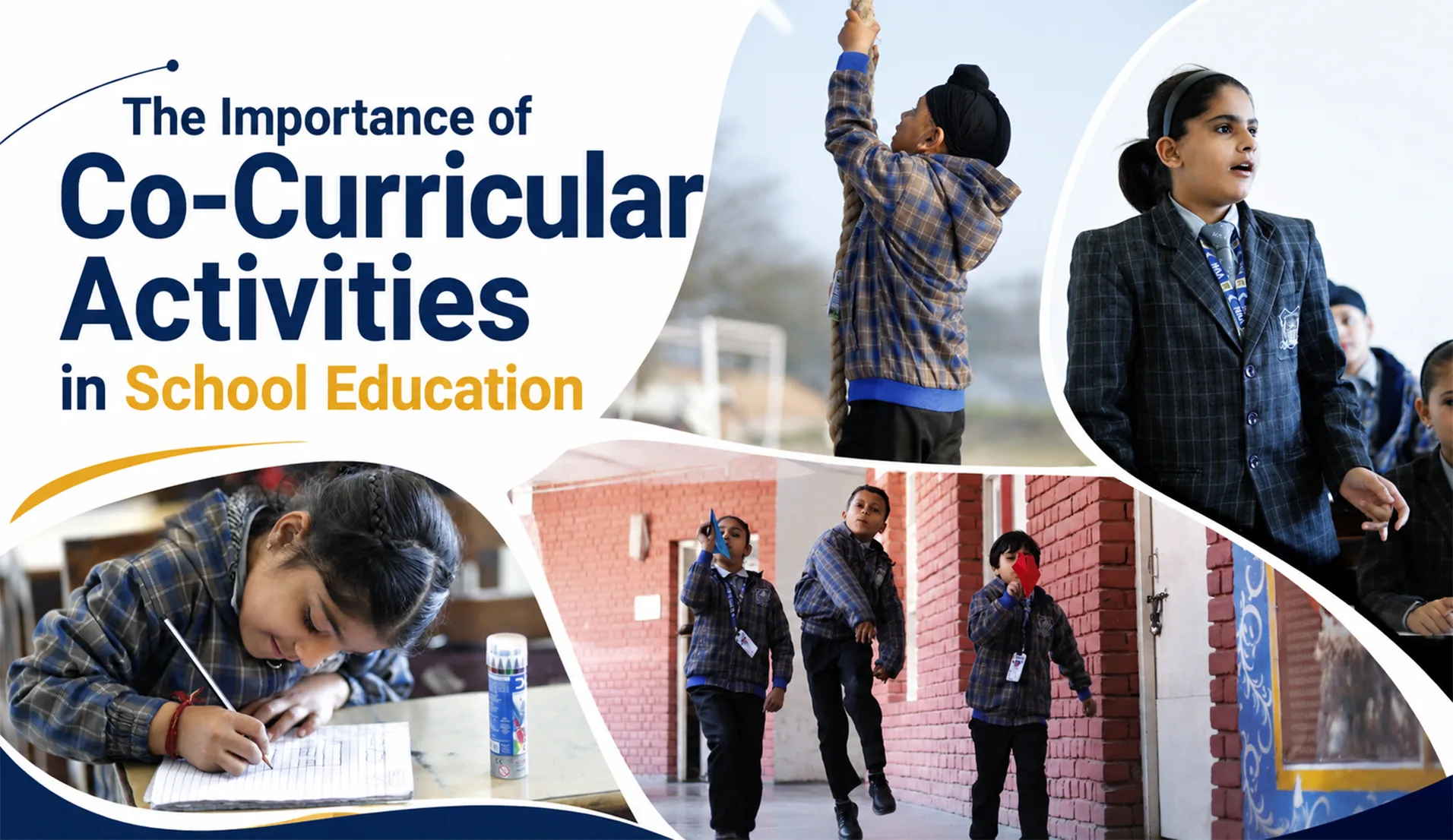
MD: Co-curricular activities such as sports, arts, music, and dance help students by promoting balanced development of academic, social, and personal skills.
Introduction: Why Education Is More Than Academics
Modern education has changed everything; now parents are not only concerned about their child’s marks but also about their physical health, creativity, and social skills.
Co-curricular activities are an important part of school education; they help students explore their interests, build confidence, and develop essential life skills beyond classroom learning.
Many people think schools are just for academics, which is a false statement, because it is also about social and creative development, and we have to be more aware of that. At Vivekanand Assandh, we believe that these activities should be taught to students from childhood to help them grow better.
What Are Co-Curricular Activities?
Co-curricular activities are practiced alongside regular academics and contribute to a student’s overall development. While classroom learning helps students gain knowledge and academic skills, co-curricular activities provide opportunities to develop creativity, confidence, leadership, teamwork, and communication skills.
Co-curricular activities include sports, music, dance, art, debates, quizzes, drama, science clubs, cultural events, and community service programs. They help students discover their interests and talents beyond academics.
In today’s educational environment, co-curricular activities are considered an essential part of holistic education. They help students become well-rounded individuals who are prepared not only for academic success but also for future personal and professional challenges.
Key Benefits of Co-Curricular Activities for Students
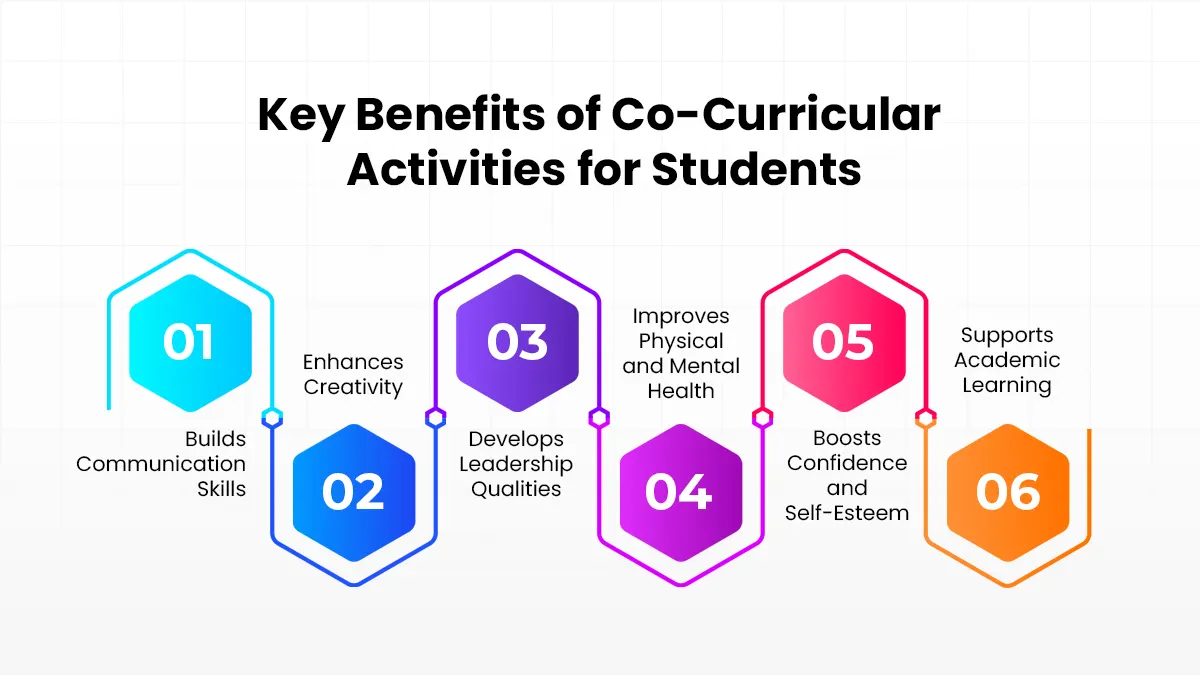
Here are some benefits of co-curricular activities for students:
1. Builds Communication Skills
Co-curricular activities include group activities with peers and teachers that help students develop strong communication skills and make new friends. They encourage collaboration, teamwork, and participation among the students.
2. Enhances Creativity
When students engage in new activities such as arts, music, drama, and creative projects instead of focusing solely on the academic syllabus, they learn to approach challenges from multiple perspectives.
3. Develops Leadership Qualities
>
Students who participate in sports events, group projects, or event organisation learn to take responsibility, make decisions, and lead others, preparing them to become good leaders in the future.
4. Improves Physical and Mental Health
Sports, yoga, and other physical activities help students stay active and healthy. Regular participation improves fitness, reduces stress, and promotes discipline and emotional well-being.
5. Boosts Confidence and Self-Esteem
Students cannot become confident just by watching motivational videos; they have to face problems and find answers, which helps them improve their problem-solving abilities and boost their confidence.
6. Supports Academic Learning
Co-curricular activities often improve concentration, time management, and discipline, which positively impact academic performance. Students learn to balance different responsibilities while staying focused on their studies.
Types of Co-Curricular Activities Schools Can Offer
Role of Teachers in Encouraging Participation
Teachers are called the second parents of students; they help students identify their interests, strengths, and hidden talents. By recognizing these abilities, teachers guide students towards the right path and help them grow with confidence.
Many students hesitate to participate in activities because of fear, shyness, or lack of confidence. Teachers help overcome these barriers by motivating students, offering encouragement, and creating a supportive environment where every child can participate in activities and events of their choice.
Teachers also act as mentors throughout the process, helping students prepare for competitions, performances, sports events, and cultural activities. Their guidance not only improves students’ skills but also teaches important values such as discipline, teamwork, responsibility, and perseverance.
Conclusion: Importance of Co-Curricular Activities in School Education
Co-curricular activities are not just some extra activities; they play an important role in shaping a child’s life. While academics help students sharpen their minds through knowledge, co-curricular activities like sports, music, arts, debates, and community service help them develop confidence, creativity, leadership, communication skills, and emotional resilience.
These activities help students learn beyond the textbooks, making them more confident, disciplined, socially aware, and prepared to meet the challenges of the future, in the classroom and beyond.
At Vivekanand Assandh, we believe that true education goes beyond academic excellence. Our focus on co-curricular activities ensures that students receive opportunities to explore their talents and build essential life skills. Contact Vivekanand Assandh today to learn how we help students achieve holistic development and prepare for a successful future.
FAQs: Importance of Co-Curricular Activities
1. What are the 5 benefits of extracurricular activities?
Ans: Here are the 5 benefits of extracurricular activities:
- Builds Communication Skills
- Enhances Creativity
- Develops Leadership Qualities
- Improves Physical and Mental Health
- Boosts Confidence and Self-Esteem
2. How important are Extracurricular Activities?
Ans: Extracurricular activities are very important as they help develop holistic skills, as mentioned in point no. 1, above.
3. Do Extracurricular Activities reduce student stress?
Ans: Yes, extracurricular activities help reduce students’ stress. Regular participation in extracurricular activities helps students stay calm and disciplined, reducing stress. Participating in these types of activities makes students happy, changes their mood, and facilitates the release of the happiness hormone, Dopamine. It leads to the regulation of feelings of motivation, pleasure, and physical movement. It acts as the brain’s “reward center,” giving a satisfying surge of motivation and well-being.