


Introduction: How Self-Discipline Leads to a Student’s Success
Many students who do well academically usually get a good head start and early exposure. To them, habit comes with ease. But the initial advantages are not what carry them all the way. Students who don’t start with this same edge often build something stronger: self-discipline through consistent effort, good habits, and the ability to stay focused on goals.
Self-discipline helps students manage time, stay focused on studies, and maintain a healthy balance between academics and personal life. It also helps them make better decisions, complete responsibilities on time, and remain motivated even when challenges arise.
In this blog, we will discuss the importance of self-discipline in a student’s life, how to build it, its benefits, and how it helps in shaping a child’s future.
What is Self-Discipline for Students?
Self-discipline is the ability to do tasks that our minds consider hard or unpleasant. There are things that we procrastinate because they don’t seem enjoyable. For students, it means studying every day, working on subjects they don’t like, or being responsible enough to be consistent without needing constant reminders from parents or teachers.
Unlike external discipline, where students follow rules because someone tells them to, self-discipline comes from within. It encourages students to take responsibility for their actions, manage their time wisely, avoid distractions, and remain focused on their priorities.
Why is Self-Discipline Important in a Student’s Life?
After understanding what self-discipline is, it is important to understand why it is important. Here are some reasons why it is important for students:
- Helps Students Stay Focused on Their Goals: Self-disciplined students avoid distractions and stay focused on their studies and personal growth.
- Improves Consistency in Studies: It helps students build daily study habits, making them consistent in their studies.
- Encourages Responsibility and Accountability: Most self-disciplined students create a timetable to hold themselves accountable for their time and the tasks they perform.
- Reduces Procrastination and Distractions: It helps students complete tasks they usually don’t want to do, reducing procrastination and distractions.
- Builds Confidence and Independence: Achieving goals through consistent effort increases students’ self-confidence and encourages them to become more independent learners.
- Develops Better Decision-Making Skills: Students think for themselves more, make thoughtful decisions, control impulsive behaviour, and choose actions that support their long-term success.
Key Benefits of Self-Discipline for Students
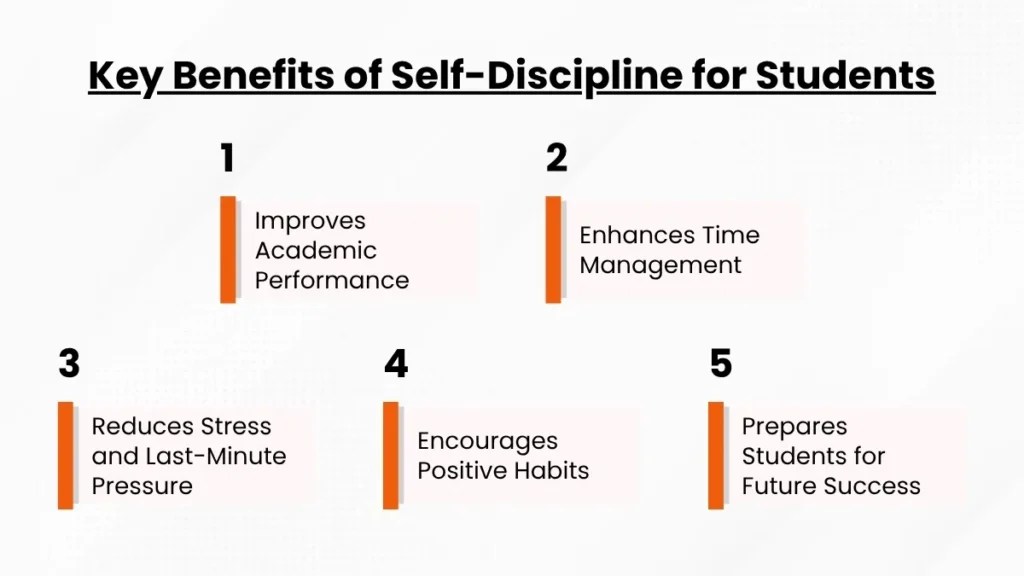
Here are some benefits of self-discipline for students:
1. Improves Academic Performance
Self-discipline helps students follow a study routine, complete assignments on time, and stay consistent in their preparation, leading to a better understanding of concepts and improved academic results.
2. Enhances Time Management
Disciplined students learn how to manage their time effectively. So, they can balance studies, extracurricular activities, hobbies, and personal time without feeling overwhelmed.
3. Reduces Stress and Last-Minute Pressure
Exams stress students; however, self-discipline teaches them to plan for the future, preventing any last-minute pressure. This allows students to approach exams and assignments with greater confidence.
4. Encourages Positive Habits
Practicing self-discipline helps students develop healthy habits such as regular studying, punctuality, proper sleep, and balanced routines. These habits contribute to both academic success and overall well-being.
5. Prepares Students for Future Success
It helps students build small, effective habits from their childhood, helping them stay ready for higher education, careers, and personal life with confidence, consistency, and determination.
Common Challenges Students Face in Developing Self-Discipline
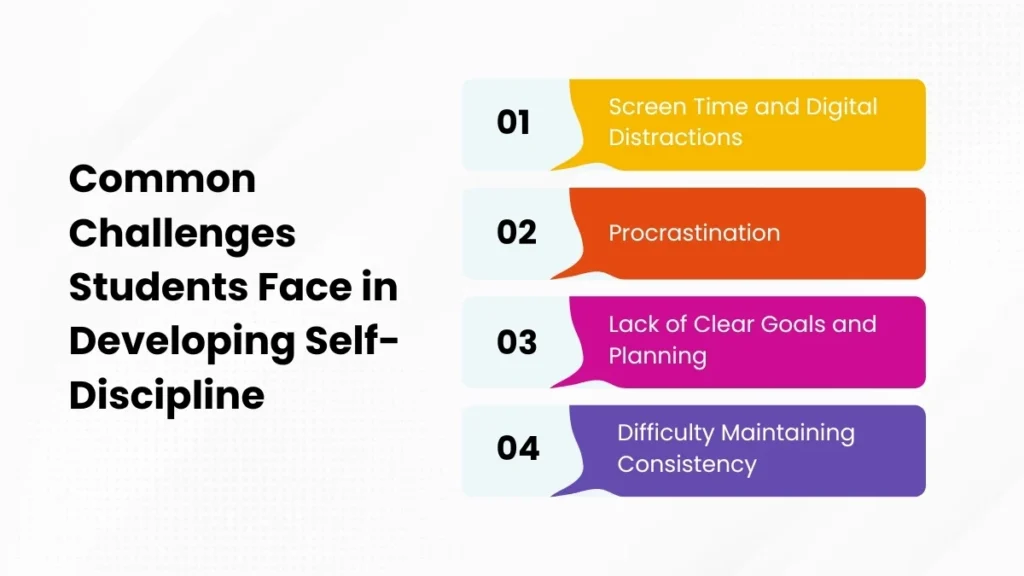
Here are some challenges that students face while becoming self-disciplined:
1. Screen Time and Digital Distractions
Using a phone is not a problem while focusing on studies; in reality, technology helps with studies. But excessive mobile phone use or hours of screen time leave you with little to no time for self-study or proper rest, which can further lower your IQ.
2. Procrastination
Many students never start a learning habit or stick to their timetable, as they always think they will start tomorrow, leading to a loop of procrastination.
3. Lack of Clear Goals and Planning
When students are not driven, they do things at random times, creating a disaster at the time of submitting an assignment or preparing for exams.
4. Difficulty Maintaining Consistency
Students who are not persistent with their goals start working on something for two to three days, then change their routine and start doing something else, having no consistency in the work they do.
Simple Ways Students Can Develop Self-Discipline
Here are some simple ways students can develop self-discipline:
- Set Clear and Realistic Goals: Setting small, achievable goals helps students stay motivated and track their progress without feeling overwhelmed.
- Follow a Daily Routine: A daily routine helps students build small habits that help them with studying, playing, and resting.
- Prioritize Important Tasks: Instead of studying any random subject, create a priority list and complete your study sessions accordingly.
- Limit Distractions: While studying, make sure the room is quiet and put your phone in another room to stay focused.
- Complete Tasks on Time: Setting deadlines for yourself helps you complete your tasks on time and avoid procrastination.
- Learn from Mistakes: Instead of getting discouraged by failures, students should reflect on their mistakes, learn from them, and continue improving with a positive mindset.
How Schools Help Students Build Self-Discipline
Schools play an important role in helping students develop self-discipline from an early age. By providing a structured environment with clear rules, routines, and expectations, schools teach students the importance of punctuality, responsibility, and consistency.
Teachers also play a significant role in becoming self-disciplined by guiding students to set goals, manage their time effectively, and complete tasks responsibly. Through regular assignments, projects, and classroom activities, students learn to stay organized, meet deadlines, and take ownership of their learning.
By combining structured learning with continuous guidance and value-based education, schools create an environment where students naturally develop self-discipline.
Conclusion: Importance of Self-Discipline
Self-discipline is an important habit in a student’s life, and you cannot learn it in one day; it takes time to become consistent. But after learning self-discipline, a student starts making right choices consistently, stays committed to goals, and learns to overcome challenges with determination, helping the student grow academically and personally.
At Vivekanand Assandh, we believe that self-discipline is the foundation of holistic development. Through value-based education, structured learning, and continuous mentorship, we help students develop the confidence, responsibility, and discipline they need to succeed in school and beyond. Contact Vivekanand Assandh today to learn how we nurture disciplined, future-ready learners who are prepared to excel in every stage of life.
FAQs: Importance of Self-Discipline
1. How to build self-discipline as a student?
Ans: Here are some ways to become self-disciplined as a student:
- Set Clear and Realistic Goals
- Follow a Daily Routine
- Prioritize Important Tasks
- Limit Distractions
- Complete Tasks on Time
- Learn from Mistakes