

Introduction: Why Confidence Matters in a Child’s Development
Today, schools are more than just places where children gain academic knowledge. It’s a place where they build relationships, discover interests, express themselves, and learn to be part of the community. School events like annual days, sports days, exhibitions, and competitions help children build confidence.
Confident students are more likely to participate in classroom discussions, try new activities, communicate with others, and handle challenges without being afraid of making mistakes.
In this blog, we will explore how school activities help children build confidence that will serve them throughout their lives.
What Is Confidence in Children?
Confidence in children is their ability to willingly take on new challenges that make them feel anxious or question their capabilities. Confident children feel comfortable expressing their thoughts, asking questions, trying new activities, and learning from mistakes without being overly afraid of failure.
Confidence in children does not mean they never feel nervous; it means that when nervousness comes up, they can overcome it. Schools and parents can both play an important role in creating an environment where children feel supported and comfortable growing at their own pace.
How Do School Activities Help Build Confidence in Children?
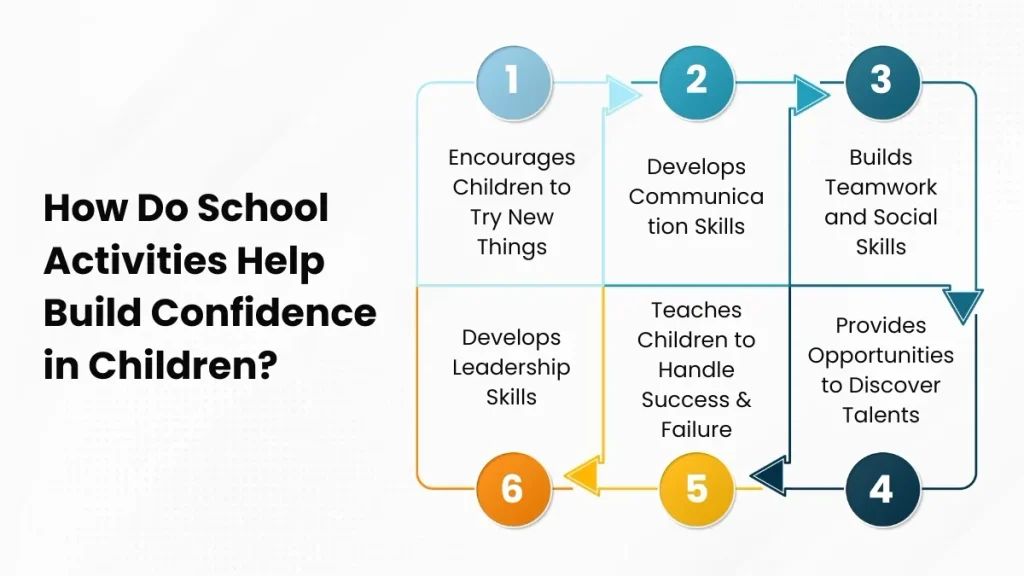
School activities give children opportunities to participate, interact, take responsibility, and discover their abilities beyond regular classroom learning.
1. Encourages Children to Try New Things
Trying something unfamiliar and learning through that experience reduces the fear of making mistakes and encourages children to take on new challenges.
2. Develops Communication Skills
When students participate in daily activities such as public speaking, debates, presentations, and group discussions, they communicate with other children and teachers, helping them develop better communication skills.
3. Builds Teamwork and Social Skills
Team-based activities teach children how to cooperate, listen to others, share responsibilities, and work towards a common goal. Positive interactions with classmates can help children become more comfortable in social situations.
4. Helps Children Discover Their Talents
Participating in different activities, students learn their interests and strengths, whether in sports, music, arts, academics, technology, or other areas. Discovering something they enjoy or excel at can strengthen their belief in their own abilities.
5. Teaches Children to Handle Success and Failure
Winning can make children feel proud, while losing makes them learn from their mistakes and improve. Participating in different activities helps children understand that setbacks are a natural part of learning and encourages them to keep trying.
6. Develops Leadership Skills
Taking responsibility during school events, group projects, sports, or other activities can help children develop leadership skills. Making decisions, guiding others, taking initiative, and completing responsibilities can gradually improve their confidence and sense of responsibility.
Types of School Activities That Can Build Confidence
Here are some school activities that can build confidence:
| School Activity | How It Builds Confidence |
| Public Speaking & Debates | Improves communication and self-expression |
| Sports | Builds discipline, teamwork, and resilience |
| Music & Dance | Encourages creativity and improves/builds confidence |
| Art & Craft | Supports self-expression and creativity |
| Competitions & Quizzes | Encourages participation and healthy challenges |
| Group Projects | Develops teamwork and responsibility |
| Cultural Activities | Builds social confidence and participation |
| Leadership Activities | Develops responsibility and decision-making |
Role of Teachers in Building Confidence Through Activities
Teachers play an important role in building children’s confidence through school activities. By encouraging students to participate in sports, public speaking, group projects, competitions, and creative activities, teachers can help them step outside their comfort zones and discover their abilities.
Teachers should focus on students’ strengths and interests rather than only their results. A supportive classroom environment allows students to participate without fear of judgment, and gradually, they become more confident in their abilities.
How Parents Can Encourage Confidence Beyond School
Parents can encourage children to participate in activities they enjoy, express their opinions, and take on age-appropriate responsibilities. Giving children opportunities to make small decisions can also help them become more independent and confident.
Avoiding comparisons with other children and encouraging them to learn from mistakes can help them handle setbacks positively. Giving time for hobbies, sports, reading, and creative activities can also help children explore their interests and build confidence beyond the classroom.
Conclusion: Helping Children Become More Confident
Confidence is an important part of a child’s overall development, and school activities provide valuable opportunities to build it. Through sports, public speaking, competitions, creative activities, group projects, and leadership opportunities, children can learn to communicate, take responsibility, handle challenges, and believe in their abilities.
At Vivekanand Assandh, we believe that education goes beyond academics. Giving students opportunities to participate, explore their interests, and learn from both success and setbacks. With the right support from teachers and parents, these experiences can build confidence that benefits children throughout their lives. Contact us today to get your child at the best school in Assandh.
FAQs: School Activities Help Build Confidence
1. What activities help build confidence in kids?
Ans: Activities such as sports, debates, group projects, competitions, and creative activities help build kids’ confidence.