

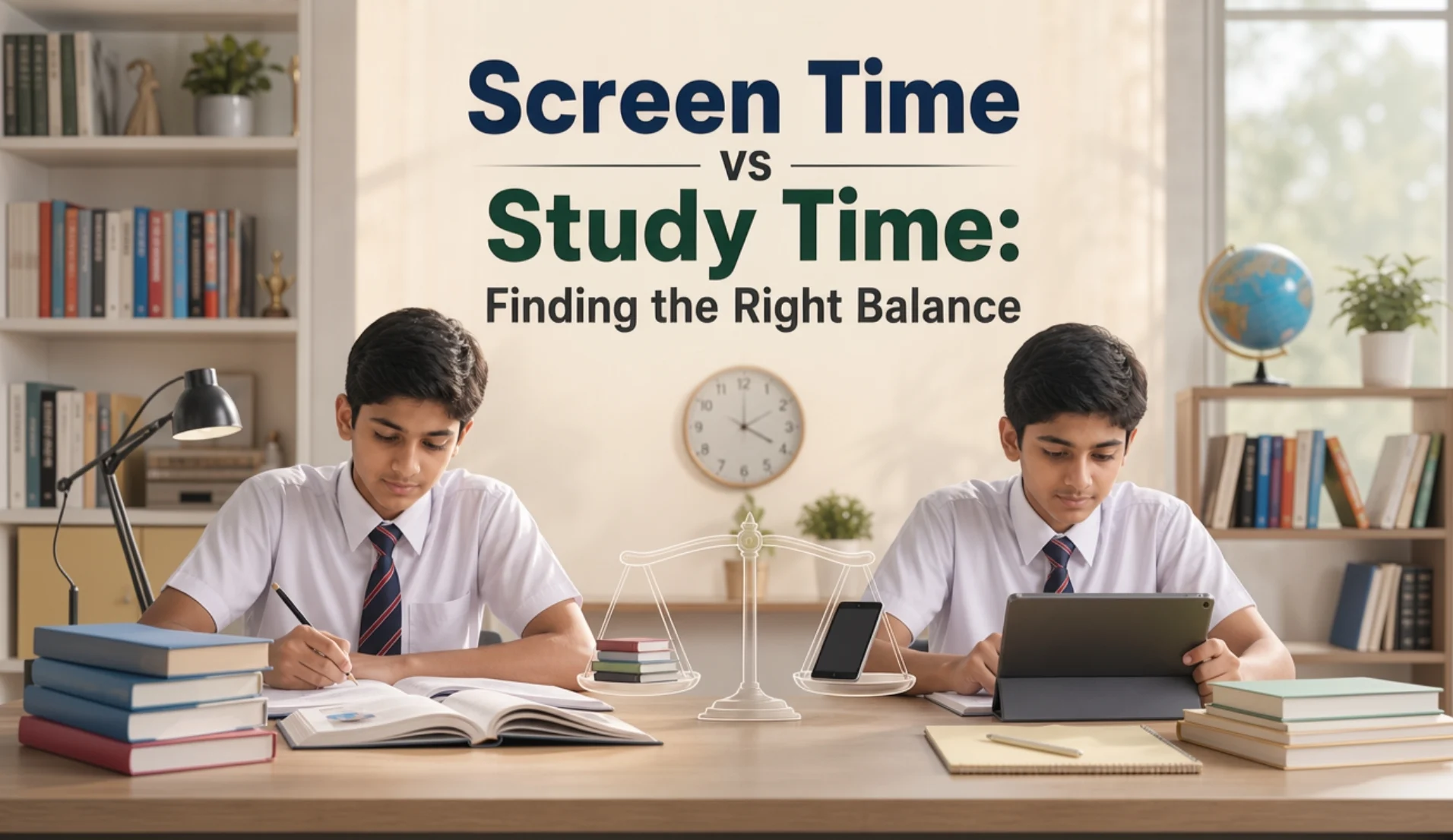
Introduction: Finding Balance Between Screen and Studies
Modern times have made screens a major part of our lives. Studies show that teenagers in India have an average screen time of 4-6 hours. Higher screen time is creating many problems in a student’s life, and one of the biggest is a low retention rate.
Technology has taken over the minds of students, but it is not the real problem; it’s just a tool that, when used wisely, can actually help students with their studies rather than creating problems.
In this blog, we will explore how to create the perfect balance between screen time and study time, and reveal how to use technology to help students learn better and faster.
What Is the Right Amount of Screen Time for Students?
Studies suggest that students can use screens for entertainment for up to 2 hours per day. When students exceed that limit, the screen begins to have a significant impact on their brains.
But, as mentioned before, screen time is not the problem; the problem is what it is used for. Many schools have started using laptops and tablets instead of regular books. Educational screen time does not affect students negatively if used correctly and for a certain duration; instead, it helps make lessons more interesting.
How Can Screen Time Affect Students’ Studies?
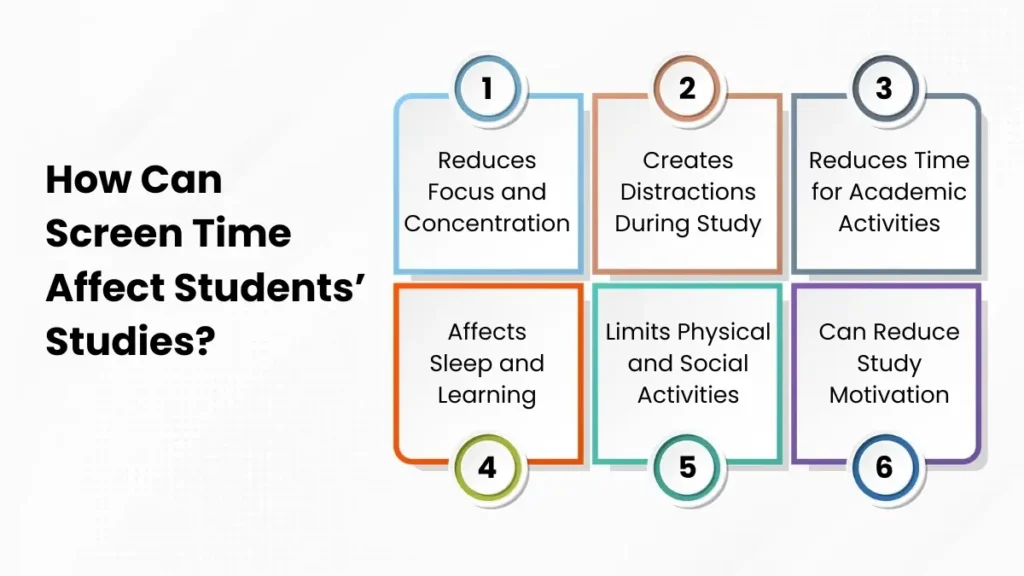
Screen time is useful only when used for educational purposes, and that too for a certain duration. If we use screens for an excessive amount of time for entertainment, then it:
1. Reduces Focus and Concentration
Scrolling on social media affects your retention and concentration, making it harder for students to focus during study time.
2. Creates Distractions During Study
Using these devices excessively can get students addicted and distract them while studying. Even when studying, when they don’t require any kind of screen, their mind will automatically search for it to scroll through social media, play games, or binge-watch.
3. Reduces Time for Academic Activities
Using screens for multiple hours for entertainment purposes leaves them with little to no time to read, revise, or complete homework. The time that can be used to prepare for upcoming exams usually gets spent scrolling.
4. Affects Sleep and Learning
Using a phone just before going to sleep affects students’ sleep quality. Poor sleep makes students tired throughout the day, making it hard for them to focus on studies and related activities.
5. Limits Physical and Social Activities
With the high use of screens, students have stopped playing outdoor games, reducing their physical activity. Not going out or interacting with friends or new people can trigger social anxiety.
6. Can Reduce Study Motivation
Engaging daily with highly addictive screen entertainment may make students lose interest in studies.
How Can Technology Support Student Learning?
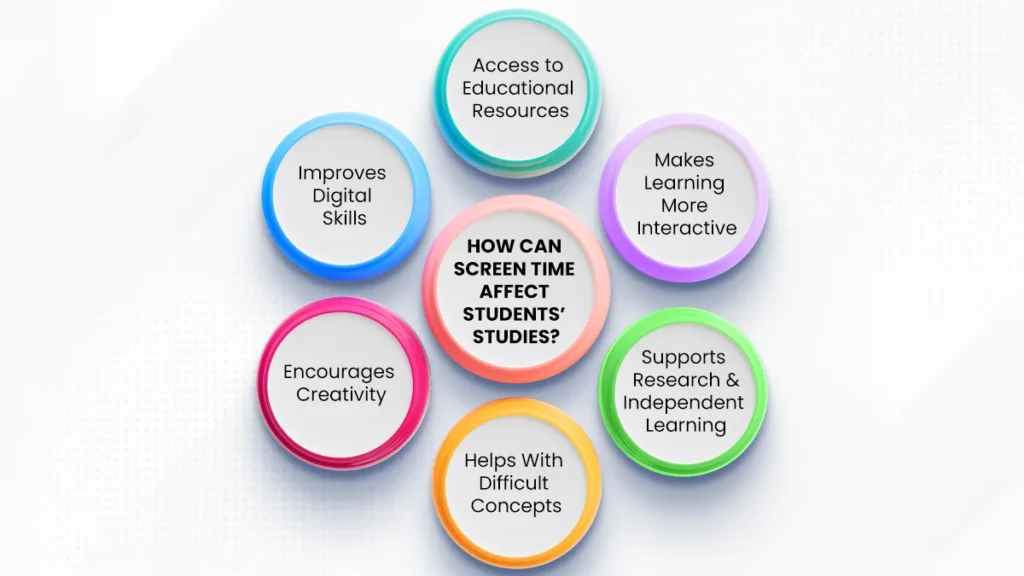
Here are some ways technology actually helps students support their learning:
1. Access to Educational Resources
With the help of the internet, students can access the required resources wherever and whenever they want. They can access useful resources on their phones or laptops.
2. Makes Learning More Interactive
When students have access to technology, they can learn from online learning platforms that provide engaging content. These online educational platforms are designed to spark curiosity and keep them engaged during the learning sessions.
3. Supports Research and Independent Learning
Technology allows students to research topics, find reliable information, and explore subjects they are curious about. This encourages independent learning and develops research skills.
4. Helps With Difficult Concepts
Every student has a different learning capacity; students with weak learning capacity can rewatch their lessons to understand the concept, while other students can revise or explore the advanced level of the concept.
5. Encourages Creativity
Digital tools like Google Slides, Microsoft Excel, and other similar worksheets can help students present their assignments in more creative ways, increasing their creative learning in the process.
6. Improves Digital Skills
The world is driven by technology, so using it daily helps students increase the digital efficiency that helps them in the future for various roles or projects. It cultivates a sense of responsibility in them.
Screen Time vs Study Time: How to Create a Healthy Balance
| Area | What Students Should Do | How It Helps |
| Create a Daily Schedule | Set dedicated time for studies, screen use, physical activities, hobbies, and rest. | Helps students maintain a balanced routine. |
| Set Screen-Free Study Hours | Keep phones and unnecessary devices away while studying. | Reduces distractions and improves concentration. |
| Use Screens With a Purpose | Prioritize educational content over unnecessary scrolling and entertainment. | Makes screen time more productive and meaningful. |
| Take Regular Breaks | Take short breaks between study sessions instead of switching to prolonged screen use. | Helps refresh the mind and maintain focus. |
| Avoid Screens Before Bedtime | Reduce unnecessary screen use before going to sleep. | Supports a healthier sleep routine and better daytime focus. |
| Make Time for Outdoor Activities | Include sports, exercise, walking, or outdoor games in the daily routine. | Supports physical health and provides a healthy break from screens. |
| Balance Online and Offline Learning | Combine digital resources with books, writing, discussions, and practical activities. | Develops well-rounded learning habits. |
| Review Screen Habits Regularly | Check how much time is spent on learning versus entertainment. | Helps students become more responsible about their technology use. |
How Parents Can Help Students Manage Screen Time
Parents can help students create a proper schedule that will help them manage time efficiently and function throughout the day. Making dedicated time slots for studying, playing, screen use, hobbies, and family time helps children develop a balanced daily routine.
Parents should also tell their children to use technology productively instead of just for entertainment. Educational videos, learning apps, online research, and digital resources can make studying more interactive, while sports, reading, creative activities, and family time provide healthy alternatives to screen use.
Also, parents should be an example and lead their children by not using excessive screens for entertainment in front of them.
How Vivekanand Assandh Encourages a Balanced Approach
At Vivekanand Assandh, we believe technology should support learning rather than become a constant distraction. We encourage students to use digital tools meaningfully while maintaining a healthy balance between classroom learning, screen-based activities, reading, sports, co-curricular activities, and personal time.
Our teachers guide students towards responsible use of technology and help them develop important skills such as time management, self-discipline, and focused learning. By combining technology with practical activities, discussions, physical education, and creative experiences, students get opportunities to learn in different ways.
Conclusion: Screen Time vs Study Time
Today, technology is an important aspect of a student’s life and can provide them with knowledge and intelligence if used properly. When students use technology wisely, they gain benefits such as access to more educational resources, and learning becomes more interactive and interesting. It helps with research and independent learning, explains difficult concepts, encourages creativity, and improves their digital efficiency.
In this technology-driven journey, parents can also help their children by guiding them to make a proper timetable and inspiring them to use technology for educational purposes more than for entertainment. If you are looking for a school that helps students understand the importance of technology in studies and also helps parents guide their children, contact Vivekanand Assandh today!
FAQs: Screen Time vs Study Time
1. Is 7 hours of screen time unhealthy?
Ans: Yes, 7 hours of screen time is very unhealthy for your mind. Experts recommend using screens for up to 2 hours for entertainment.
2. Does screen time lower IQ?
Ans: Yes, excessive screen time for doom-scrolling or entertainment can lower your IQ.
3. What is Gen Z’s average screen time?
Ans: The average screen time of Gen Z is 4-6 hours per day.
4. What are 5 negative effects of screen time?
Ans: Here are 5 negative effects of screen time:
- Reduces focus and concentration
- Creates distractions during study
- Reduces time for academic activities
- Affects sleep and learning
- Limits physical and social activities