

Introduction: Emotional Balance in
Students
Emotional balance in students is much more important than grades or any exams. While
academic performance is important for student success, emotional intelligence plays an
equally crucial role in shaping how students navigate their academic journey.
At Vivekanand Assandh, we are well aware of the importance of the emotional well-being of
a child. Understanding and developing emotional intelligence can significantly enhance a
student’s ability to perform in school, deal with challenges, and thrive socially and
emotionally.
What Is Emotional
Balance in Education?
Emotional balance in education means students can recognize, understand, and manage their
feelings without being overwhelmed. It allows them to navigate challenges, focus on
learning, build healthy relationships, and develop resilience, fostering overall
well-being alongside academics.
As students advance to higher classes, the academic pressure increases, and emotional
balance helps them handle the pressure of studies, competition, and expectations. When
students are emotionally balanced, they create a productive environment in the
classroom, building better relationships with teachers and peers.
Emotional balance is not about suppressing emotions, but about recognizing them and
responding wisely. Schools that prioritize emotional well-being help students grow into
confident, resilient learners who can succeed both academically and personally.
Why Emotional
Balance Is Important for Students
Emotional balance allows students to navigate challenges, focus on learning, build
healthy relationships, and develop resilience, fostering overall well-being alongside
academics. Here are some key benefits of emotional balance:
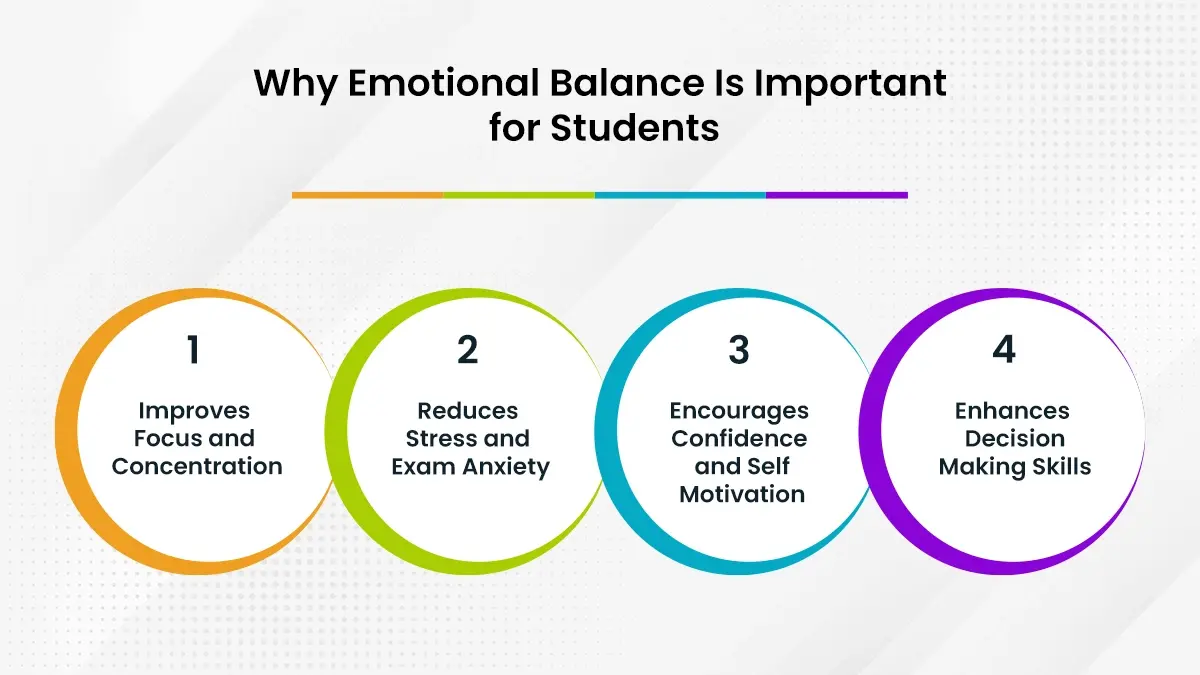
1. Improves Focus and Concentration
- Stress, fear, or anxiety has less effect on emotionally
balanced students, allowing them to focus on their studies. - They are better able to understand concepts and retain
information for a longer time.
2. Reduces Stress and Exam Anxiety
- Students often experience pressure due to competitive exams
and performance expectations. - Emotional balance helps them stay calm during assessments,
think clearly, and perform to their true potential.
3. Encourages Confidence and Self-Motivation
- Understanding and controlling emotions helps students
develop self-confidence. - Emotionally stable students believe in their abilities and
stay motivated to achieve their academic goals.
4. Enhances Decision-Making Skills
- When emotions are managed well, students can make thoughtful
decisions instead of reacting impulsively. - This helps them handle academic challenges and everyday
situations more wisely.
How Emotional
Balance Improves Academic Performance
Emotional balance not only supports personal development, but it also plays a direct role
in improving academic performance. Here are some ways it helps:
1. Enhances Learning Ability
- When a student is calm and focused, they can absorb
information more easily. - This helps them understand concepts faster, participate
actively in class, and show improved memory retention.
2. Supports Healthy Relationships
- Students who manage their emotions well are more attentive
and involved during lessons. - They feel comfortable asking questions, participating in
discussions, and expressing their ideas without fear or hesitation.
3. Supports Better Exam Performance
- During exams, emotional balance helps students stay composed
under pressure. - Reduced anxiety allows them to think clearly, manage time
efficiently, and recall information accurately.
4. Encourages Consistency in Studies
- Students with emotional stability are more disciplined and
consistent in their study habits. - They are less likely to procrastinate or lose motivation due
to stress or frustration.
Common Emotional
Challenges Faced by Students Today
In today’s world, children are facing many emotional challenges that affect their
learning, confidence, and overall well-being, disrupting their mental health. It is
important to understand these challenges to help students overcome them.
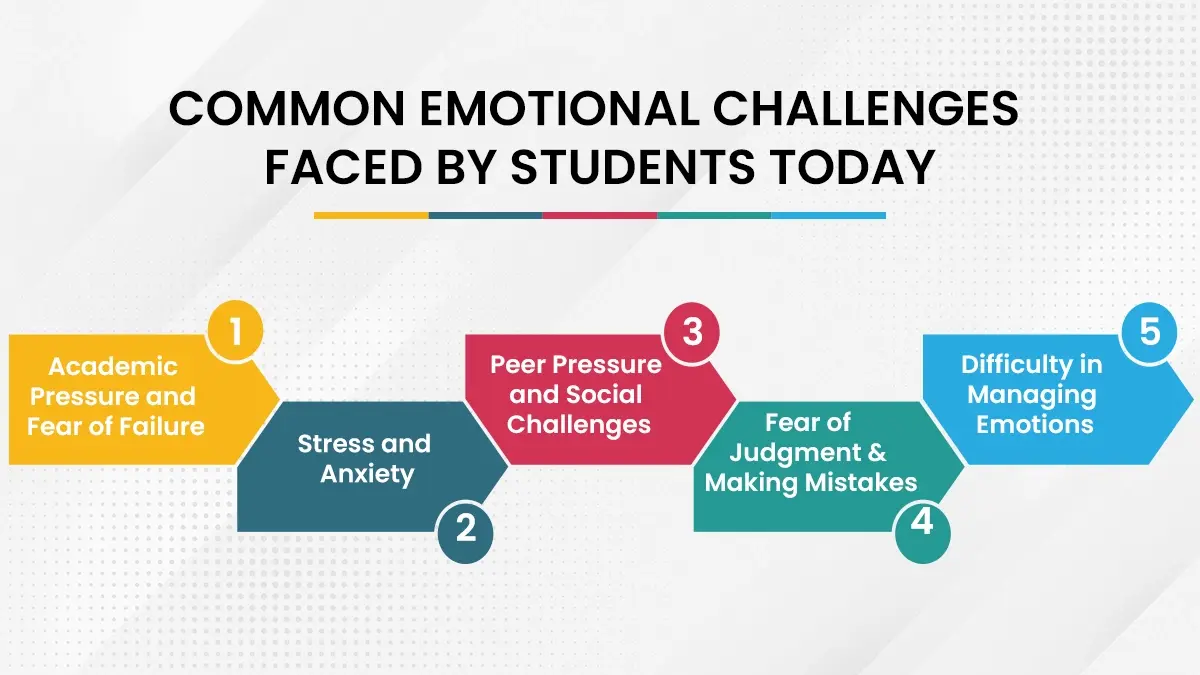
1. Academic Pressure and Fear of Failure
- High expectations from exams, competition, and performance
comparisons often lead to academic pressure. - This fear of failure can reduce confidence and negatively
impact academic performance.
2. Stress and Anxiety
- Tight schedules, frequent assessments, and the expectation to
excel in multiple areas lead to stress and anxiety. - This constant pressure affects their focus, emotional balance,
and interest in learning.
3. Peer Pressure and Social Challenges
- The desire to fit in and gain acceptance from peers can
emotionally affect students. - It can influence their decisions, behaviour, and
self-esteem.
4. Fear of Judgment and Making Mistakes
- Students often fear judgment from peers and teachers.
- This makes them hesitate to ask questions or express ideas,
limiting their learning opportunities and emotional growth.
5. Difficulty in Managing Emotions
- Many students find it challenging to understand and regulate
emotions such as anger, frustration, or sadness. - This can result in impulsive behaviour, conflicts, or loss of
concentration in class.
Role of Schools
in Developing Emotional Balance
Schools play a vital role in shaping a student’s emotional well-being, as they are the
primary environment where children learn, interact, and grow.
1. Creating a Safe and Supportive Environment
- Students like to be treated as adults; they like to feel
respected and heard. - A positive environment at school helps them express emotions
without fear, building confidence, emotional security, and mental stability.
2. Encouraging Open Communication
- Encouraging open communication between students and teachers
helps build healthy relationships. - It also helps students improve their communication skills and
feel supported when they share their concerns.
3. Integrating Emotional Learning into Daily
Education
- Schools can include activities that promote self-awareness,
empathy, and emotional regulation within regular lessons. - This helps students understand their emotions and respond
calmly in challenging situations.
How Vivekanand
Assandh Encourages Emotional Balance
Vivekanand Assandh uses a value-based approach, helping its students learn through
interactive learning. This approach encourages open expression and mutual respect. The
school helps students manage stress and stay mentally calm, which directly supports
better focus and learning.
Along with academics, students are guided to understand and manage emotions such as
pressure, anxiety, and frustration, helping them develop self-awareness, empathy, and
emotional maturity from a young age.
The school also promotes emotional balance through yoga, mindfulness practices, and
regular physical activities. These practices help students relax, improve
concentration, and maintain mental well-being. Supported by caring teachers and a
balanced academic approach, Vivekanand Assandh ensures students grow into emotionally
stable, confident learners who perform better academically throughout their student
life.
Conclusion:
Emotional Balance = Better Academic Performance
Emotional balance is not just an additional skill but a foundation for a student’s
academic success and overall well-being. When students learn to understand and manage
their emotions, they are better equipped to handle academic pressure, build positive
relationships, and stay focused on their goals.
Schools that prioritize emotional well-being create an environment where students feel
supported, motivated, and mentally strong. By integrating emotional learning into
everyday education, students grow into resilient individuals who can balance academics
with personal growth.
At Vivekanand Assandh, emotional balance is considered as important as academic
excellence. Through value-based education, mindfulness practices, and a supportive
learning environment, the school ensures that students develop emotional strength
alongside knowledge, preparing them not only for exams but also for life ahead. Contact us today to know more about
how Vivekanand Assandh can help your child.
FAQs: The Importance of Emotional
Balance in Academics
1. What is the meaning of emotional balance?
Ans- Emotional balance means managing feelings without being overwhelmed, allowing
students to navigate challenges, focus on learning, build healthy relationships, and
develop resilience, fostering overall well-being alongside academics.
2. What is an emotionally balanced person?
Ans- An emotionally balanced person is in control of their emotions and their
behaviour. Such individuals deal with emotions in a calm way, leading to better
decisions. They stay focused in difficult situations and come out of challenges with
confidence.